Routine maintenance is one of the best investments you can make in your personal watercraft (PWC). Whether you ride a Sea-Doo, Yamaha, or Kawasaki, following a consistent maintenance schedule improves reliability, extends engine life, protects resale value, and helps prevent costly repairs.
This guide breaks maintenance into five stages—from your pre-ride inspection to winter storage—so you know exactly what to check throughout the year.
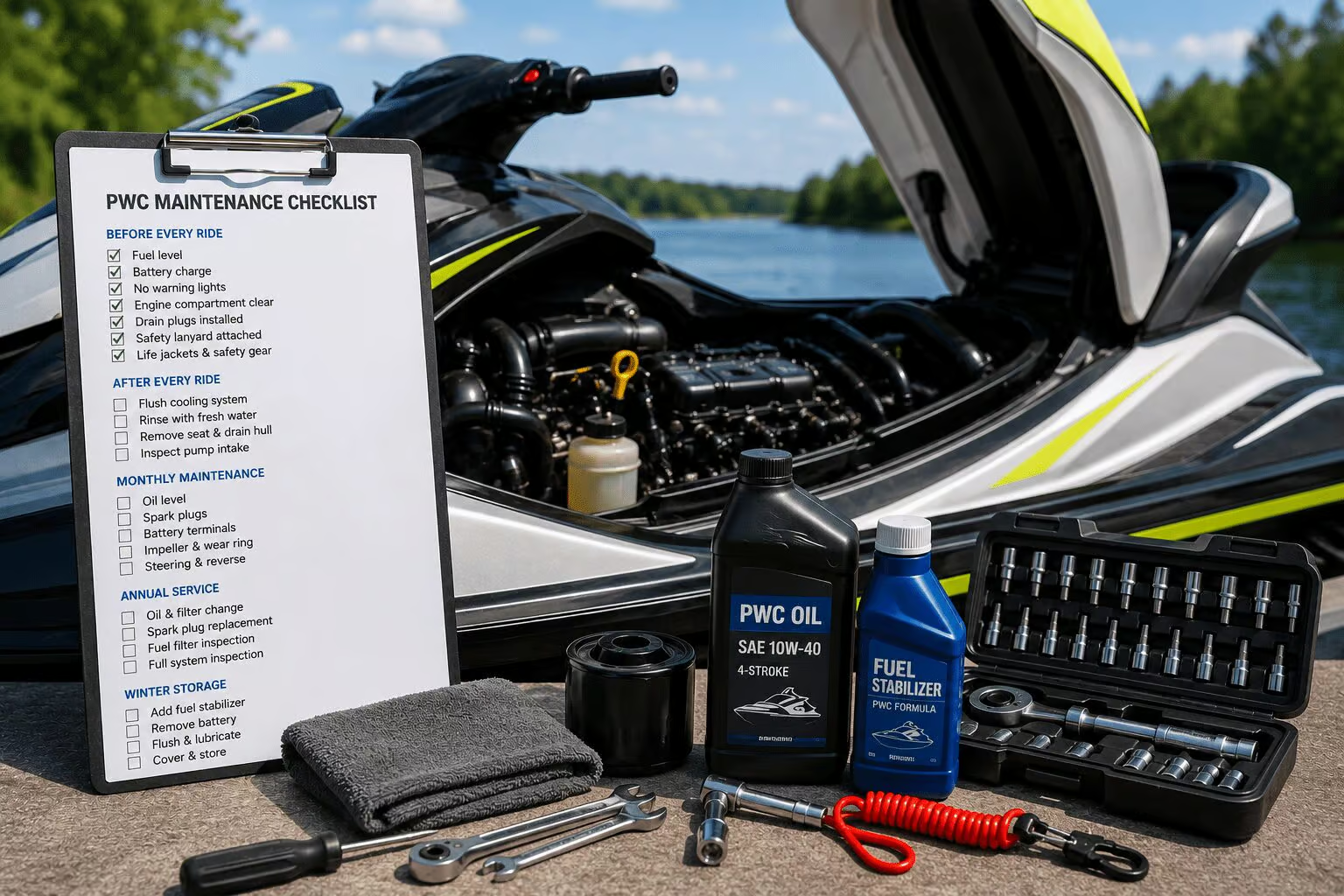
Before Every Ride: Pre-Ride Checklist
A five-minute inspection before launching can prevent many of the most common problems riders experience.
Before heading to the water, check:
✅ Fuel level
✅ Battery charge
✅ Engine starts normally
✅ No warning lights or fault codes
✅ Engine compartment is free of fuel odors
✅ Fuel lines show no signs of leaks
✅ Drain plugs are installed
✅ Safety lanyard is attached
✅ Registration is onboard
✅ Required safety equipment is present
✅ Fire extinguisher (where required)
✅ Life jackets for every passenger
✅ Trailer straps removed before launch
If you smell gasoline inside the engine compartment, do not start the engine. Fuel vapors can ignite and create an extremely dangerous situation.
After Every Ride
Taking a few minutes after every ride dramatically reduces long-term wear.
Recommended post-ride maintenance includes:
- Rinse the hull with fresh water.
- Flush the cooling system according to the manufacturer’s procedure.
- Wash away salt, sand, algae, and debris.
- Open storage compartments to dry.
- Remove the seat to allow ventilation.
- Remove the drain plugs until the hull is completely dry.
- Wipe down painted and plastic surfaces.
- Inspect the pump intake for weeds or debris.
If you regularly ride in saltwater, post-ride cleaning is especially important to reduce corrosion.
Monthly Maintenance
Throughout the riding season, inspect your PWC regularly.
Check:
- Engine oil level
- Coolant level (closed-loop systems)
- Battery terminals
- Spark plugs
- Fuel lines
- Hoses
- Steering system
- Reverse bucket
- Impeller
- Wear ring
- Intake grate
- Ride plate
- Hull condition
- Trailer tires
- Trailer bearings
- Trailer lights
- Winch strap
Addressing small issues early often prevents larger repairs later.
Annual Service
Most manufacturers recommend annual service or maintenance at specified engine-hour intervals, whichever comes first.
Annual maintenance typically includes:
- Engine oil and filter change
- Spark plug replacement
- Fuel filter inspection
- Lubrication of moving components
- Cooling system inspection
- Compression check (if needed)
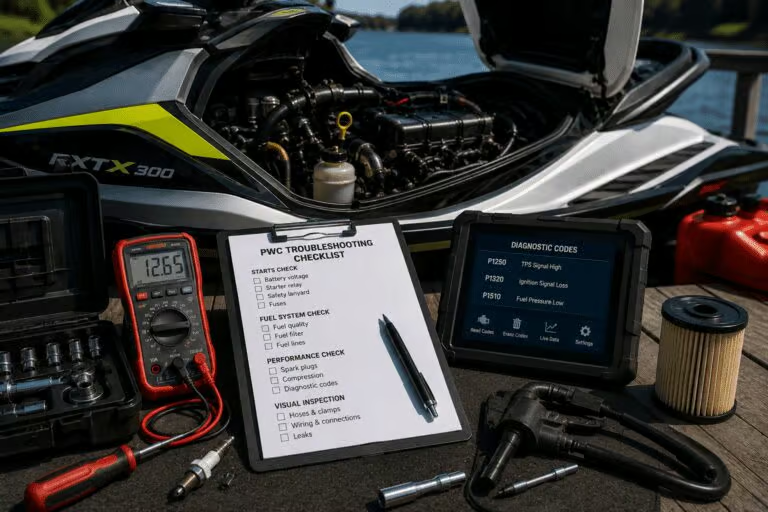
- Complete diagnostic scan
- Battery testing
- General inspection for leaks or worn components
If your watercraft is still under warranty, follow the manufacturer’s recommended maintenance schedule to help preserve warranty coverage.
Supercharged PWC Maintenance
High-performance, supercharged models require additional attention.
Depending on the manufacturer and model, maintenance may include:
- Supercharger inspection
- Clutch inspection
- Belt or gear inspection (where applicable)
- Increased oil service intervals
- More frequent spark plug replacement
Always follow the maintenance schedule outlined in your owner’s manual for your specific engine.
Winterizing Your PWC
If your watercraft will be stored where freezing temperatures are possible, proper winterization is essential.
A complete winterization typically includes:
- Thorough cleaning
- Cooling system flushing
- Fuel stabilizer
- Battery removal or maintenance charger
- Lubrication of moving components
- Moisture removal
- Proper storage with a fitted cover
Improper winter storage can lead to corrosion, damaged cooling passages, cracked components, and difficult spring startups.
Don’t Forget the Trailer
Your trailer deserves maintenance too.
Inspect regularly:
- Tire pressure
- Tire wear
- Wheel bearings
- Lights
- Safety chains
- Winch
- Hitch coupler
- Trailer wiring
- Bunks and rollers
A well-maintained trailer is just as important as a well-maintained watercraft.
Recommended Maintenance Schedule
Interval | Tasks |
|---|---|
Before Every Ride | Fuel, battery, drain plugs, safety equipment, engine inspection |
After Every Ride | Flush, rinse, dry, inspect |
Monthly | Oil, battery, steering, pump, hull, trailer |
Annually | Full service, oil, plugs, diagnostics, lubrication |
Winter Storage | Winterize and prepare for long-term storage |
Protect Your Investment
Routine maintenance doesn’t just improve reliability—it helps preserve your personal watercraft’s value while reducing the likelihood of expensive repairs.
By following a consistent maintenance schedule throughout the year, you’ll spend less time in the shop and more time enjoying the water.
At Calas Performance, we’re committed to helping riders keep their Sea-Doo and Yamaha watercraft performing at their best with quality replacement parts, maintenance products, and performance upgrades.